
News
How Public Waste Infrastructure Impacts Visitor Experience
Posted by Securr Blogger on
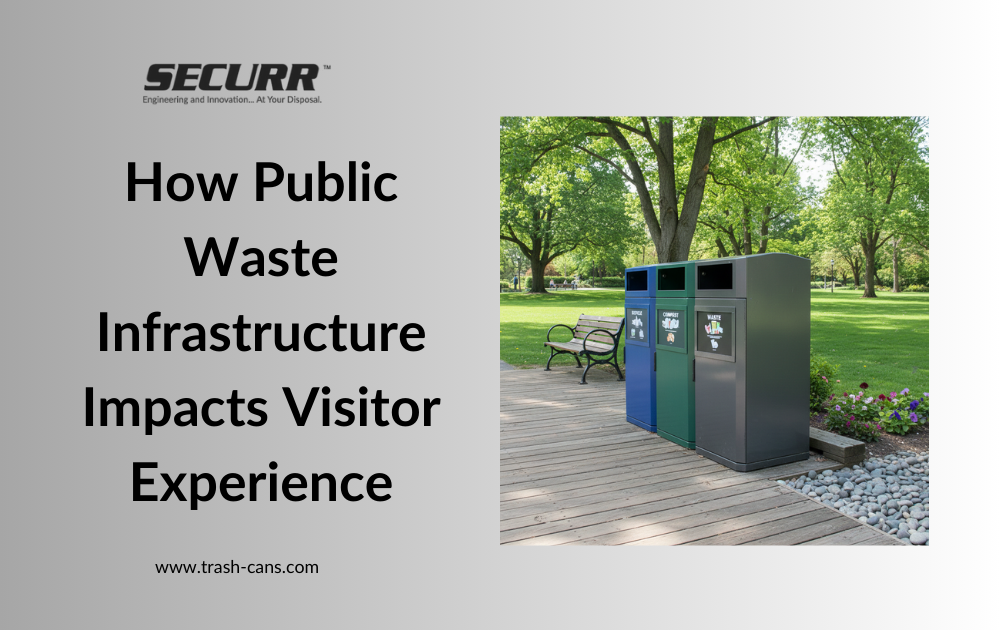
Public spaces tell a story long before a visitor reads a sign or speaks to a local. Streets, parks, transit hubs, campuses, and commercial districts all communicate values—often silently. One of the most powerful (and overlooked) storytellers? Public waste infrastructure. From cleanliness perception to wayfinding and civic trust, the design and placement of trash and recycling systems play a direct role in shaping how visitors experience a city or facility. For municipalities, designers, and property managers, partnering with a reliable trash can manufacturer like Securr can make all the difference. Cleanliness Perception Starts at the Trash Can Visitors instinctively associate clean surroundings with safety, professionalism, and care. Overflowing or poorly maintained trash bins send the opposite message—regardless of how beautiful the space might be. High-quality outdoor trash can enclosures help maintain a clean appearance by: Concealing unsightly wheeled carts Preventing litter caused by wind or animals Reducing odors and visual clutter As a leading trash can manufacturer, Securr designs solutions...
Why Cheap Coatings Fail: A Look at Wear Patterns on Trash Cans
Posted by Securr Blogger on

For any trash can manufacturer, durability isn’t just a selling point—it’s a necessity. Outdoor trash cans and enclosures face constant punishment from weather, waste handling, and daily use. Yet many low-cost products rely on cheap coatings that look good at first and fail far too soon. At Securr, we see the results of these failures every day. Let’s break down the three biggest enemies of trash can coatings—abrasion, corrosion, and UV exposure—and why cutting corners costs more in the long run. Abrasion: The Silent Coating Killer Trash cans are dragged across concrete, bumped by carts, and scraped during waste collection. Cheap coatings lack proper thickness and adhesion, which leads to: Premature scratching and scuffing Exposed bare metal or plastic underneath Accelerated wear in high-contact areas Once the coating breaks, damage compounds quickly. A professional trash can manufacturer designs finishes that can withstand constant friction without breaking down. Corrosion: What Happens After the Coating Fails When abrasion exposes the base material,...
How to Size Trash Cans Correctly for Indoor vs Outdoor Use
Posted by Securr Blogger on

Choosing the right trash can size isn’t just about gallons—it’s about performance, efficiency, and longevity. As a trusted trash can manufacturer, Securr helps businesses, municipalities, and facilities select trash receptacles that match real-world usage. Whether you’re planning for indoor spaces or outdoor environments, proper sizing depends on four key factors: volume, traffic patterns, liner compatibility, and environment-specific demands. 1. Volume: Start With Waste Output, Not Guesswork Trash can volume should align with how much waste is generated between service intervals. Indoor Trash Can Sizing Indoor areas typically generate lighter, more compact waste: Offices, lobbies, and retail spaces often perform well with 10–23 gallon trash cans Food service areas and break rooms may require 23–32 gallon capacities Oversized indoor cans can lead to odor issues and inefficient liner use, while undersized cans increase labor costs due to frequent emptying. Outdoor Trash Can Sizing Outdoor trash cans must handle: Higher volumes Bulkier waste Longer service cycles Most municipalities and facilities standardize on...
Designing Waste Stations for High-Traffic Indoor Spaces
Posted by Securr Blogger on
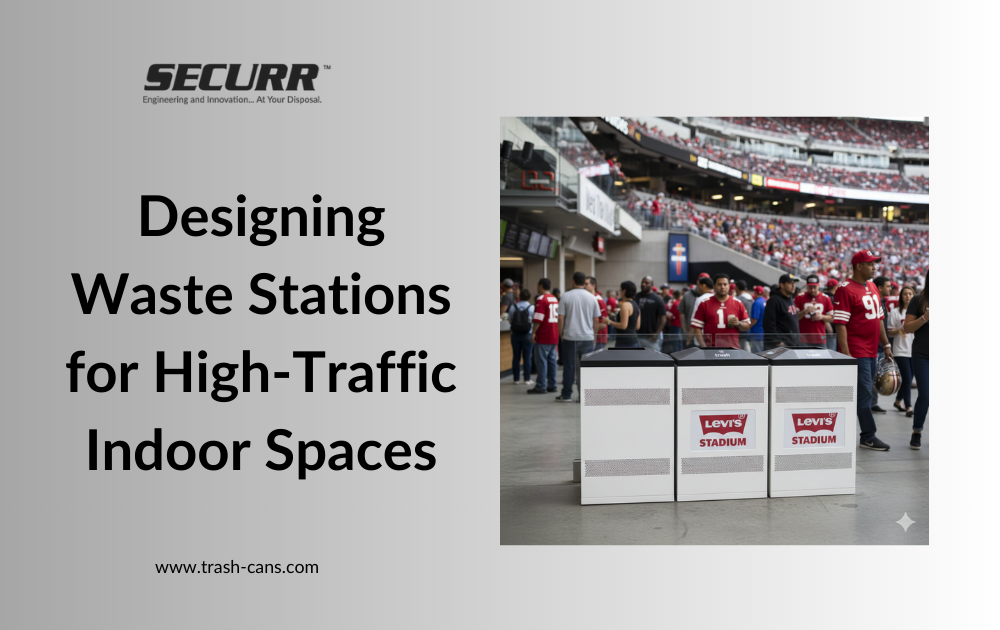
High-traffic indoor environments—such as airports, malls, universities, hospitals, and corporate campuses—require more than standard trash receptacles. Effective waste stations must be thoughtfully designed to handle heavy use, guide user behavior, and prevent bottlenecks. As a leading trash can manufacturer, Securr specializes in waste and collection solutions engineered for performance, durability, and efficiency in demanding indoor spaces. This article explores best practices for layout, flow, capacity planning, and bottleneck reduction when designing indoor waste stations—and how Securr products support those goals. 1. Strategic Layout: Placing Waste Stations Where They Matter Most In high-traffic indoor spaces, placement is critical. Poorly positioned trash cans lead to overflow, congestion, and misuse. Best practices include: Installing waste stations near entrances, exits, elevators, food courts, and restrooms Positioning units along natural walking paths, not against them Avoiding corners or tight corridors that restrict access As an experienced trash can manufacturer, Securr designs freestanding and wall-adjacent units that integrate seamlessly into indoor layouts without disrupting pedestrian flow....
Why Not All Commercial Trash Cans Are Built the Same
Posted by Securr Blogger on
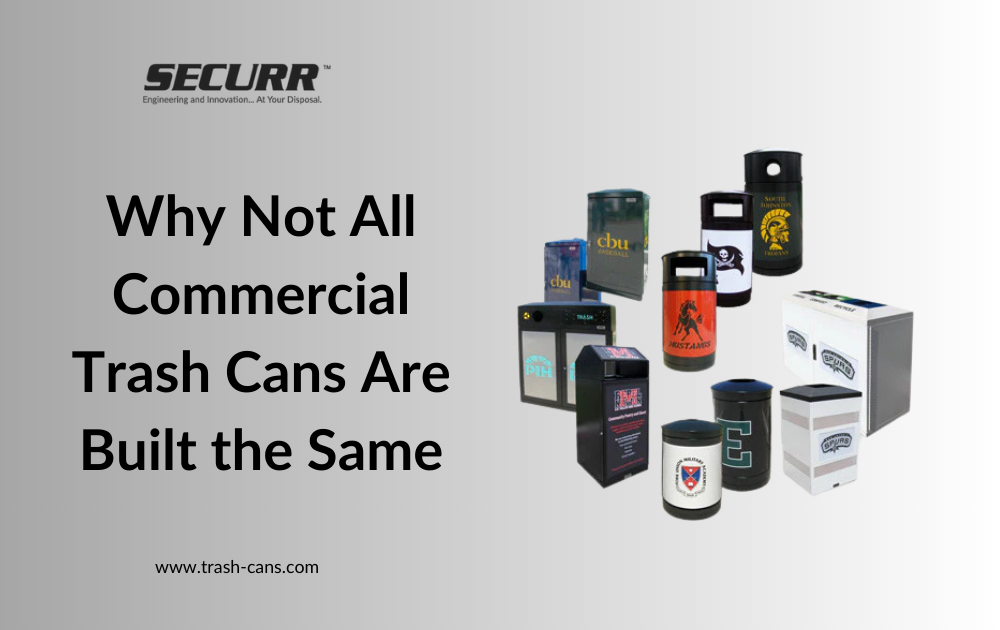
When selecting a commercial trash can, appearance is only part of the equation. Behind every durable, long-lasting waste or collection bin is a combination of engineering expertise, material selection, and manufacturing quality. As a leading trash can manufacturer, Securr understands that not all commercial trash cans are built the same—and those differences directly impact lifespan, safety, and long-term cost. 1. Manufacturing Standards Matter Many commercial trash cans are mass-produced with minimal quality control, focusing on cost rather than performance. In contrast, a trusted trash can manufacturer like Securr emphasizes: Precision fabrication and consistent welds Reinforced stress points for high-traffic environments Design testing for real-world commercial use These manufacturing details reduce failure points, prevent warping, and extend the usable life of the trash can—especially in demanding locations like shopping centers, schools, donation sites, and public facilities. 2. Material Quality Determines Longevity The materials used in commercial trash cans directly influence durability and resistance to wear. Inferior materials may rust, dent, or...