
News
What Facilities Teams Should Ask Before Ordering New Trash Cans
Posted by Securr Blogger on

Choosing the right trash cans is more than a routine facilities purchase—it’s an investment in cleanliness, safety, compliance, and long-term cost control. As a leading trash can manufacturer, Securr works closely with facilities teams across municipalities, campuses, commercial buildings, and public spaces to ensure every waste solution fits its environment and usage demands. Before placing your next order, use this pre-purchase checklist to make a confident, informed decision. 1. Where Will the Trash Can Be Used? Environment is the first and most critical question. Facilities teams should assess whether the trash can will be used: Indoors (lobbies, hallways, transit centers) Outdoors (streetscapes, parks, municipal buildings) Mixed-use environments Key considerations: Weather exposure (rain, heat, freezing temperatures) Vandal resistance Corrosion-resistant materials Ease of cleaning and maintenance As an experienced commercial trash can manufacturer, Securr designs enclosures that perform reliably in high-traffic and outdoor municipal settings. 2. How Much Waste Will It Handle Daily? Volume directly impacts performance and maintenance costs. Ask:...
How Long-Term Contracts Influence Waste Equipment Choices
Posted by Securr Blogger on
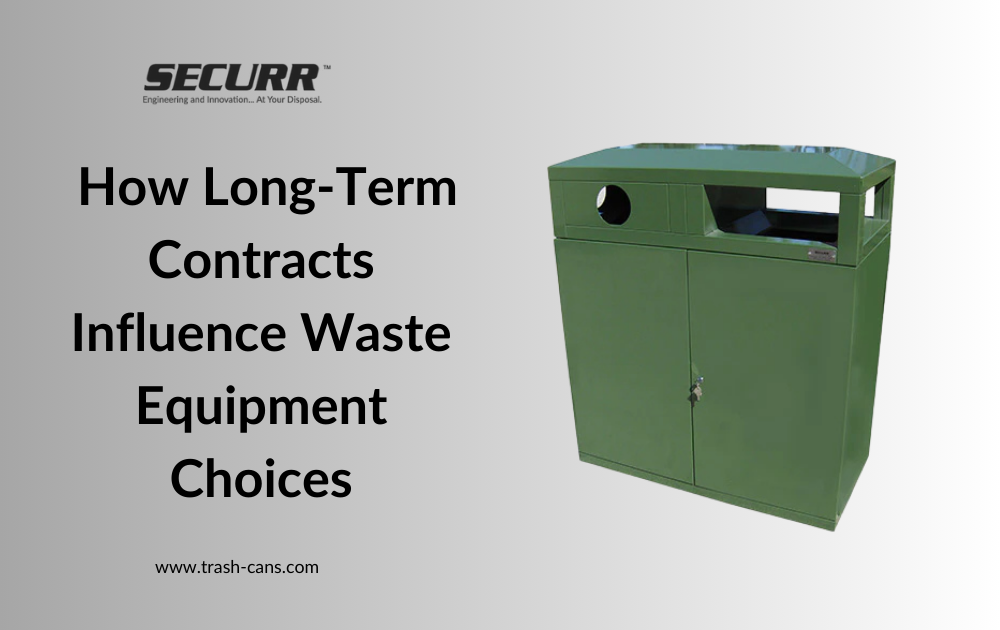
When organizations commit to long-term service contracts—whether for janitorial services, waste hauling, or facilities management—their equipment decisions shift from short-term fixes to strategic investments. For facility managers, architects, and procurement teams, choosing the right waste and recycling equipment becomes less about upfront price and more about durability, vendor trust, and total cost of ownership. As a leading trash can manufacturer, Securr works closely with customers navigating these long-term considerations. Here’s how contract length influences waste equipment choices—and why lifecycle thinking matters more than ever. Vendor Relationships Matter More Over Time Long-term contracts naturally foster long-term vendor relationships. When organizations expect to work with the same waste equipment provider for years, reliability and consistency rise to the top of the decision list. Facility teams want: Predictable product availability Consistent design language across properties Responsive customer support Equipment that aligns with evolving waste and recycling goals A trusted commercial trash can manufacturer like Securr provides more than just containers—it offers continuity. Matching...
Why Consistency Matters in Multi-Building Waste Systems
Posted by Securr Blogger on
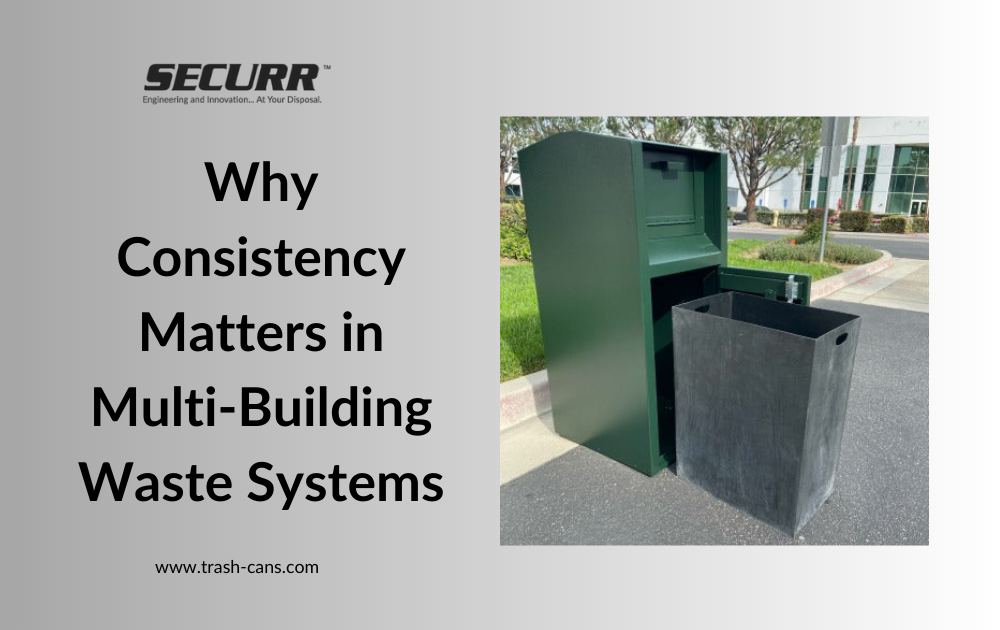
Managing waste across multiple buildings—whether on a college campus, healthcare network, commercial property portfolio, or municipal system—requires more than just placing containers. Consistency through standardization is the foundation of efficient, safe, and scalable waste management. As a trusted trash can manufacturer, Securr partners with organizations to design standardized waste systems that simplify operations, reduce risk, and create a cleaner, more professional environment across every location. The Operational Advantage of Standardization When facilities use a mix of trash cans, enclosures, and recycling containers, inefficiencies quickly add up. Different liner sizes, replacement parts, signage, and maintenance procedures increase labor time and costs—especially across large portfolios. Standardizing waste containers delivers measurable benefits: Lower procurement and maintenance costs through bulk purchasing Simplified training for custodial and maintenance teams Improved waste stream accuracy with consistent labeling Faster service and fewer errors across buildings and sites For campuses and multi-building operations, working with one reliable trash can manufacturer creates long-term operational stability. Consistency Improves Safety and...
How Waste Station Design Influences User Decision-Making
Posted by Securr Blogger on
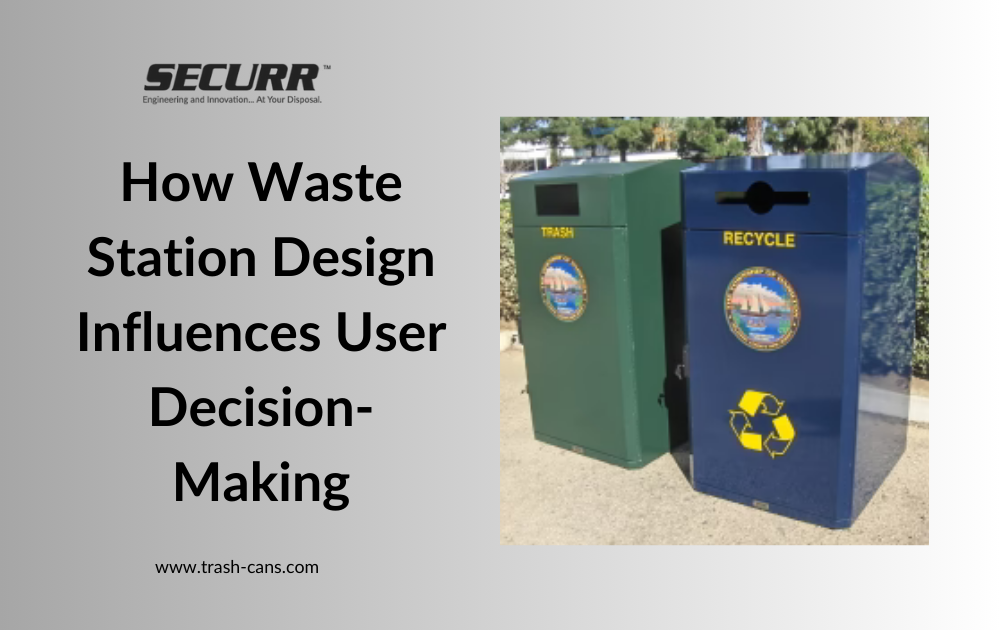
Behavioral Design, Visual Cues, and Intuitive Sorting In public and commercial environments, waste disposal is often a split-second decision. Users rarely stop to read signs or instructions—they rely on visual cues, spatial layout, and instinct. For organizations aiming to reduce contamination and improve recycling rates, waste station design matters just as much as education. As a leading trash can manufacturer, Securr engineers waste solutions that guide behavior naturally—making the right choice the easy choice. Behavioral Design: Designing for How People Actually Think Behavioral design focuses on how real people interact with their environment—not how we wish they would. When waste stations are confusing, cluttered, or inconsistent, users default to the nearest opening. That’s when contamination happens. Effective waste station design: Reduces cognitive load Eliminates guesswork Encourages fast, confident decisions Securr designs waste enclosures that support automatic decision-making, helping users sort waste correctly without stopping to think. Visual Cues That Drive Correct Disposal Humans process visuals far faster than text. Well-designed...
Common Trash Can Buying Myths That Cost Organizations Money
Posted by Securr Blogger on
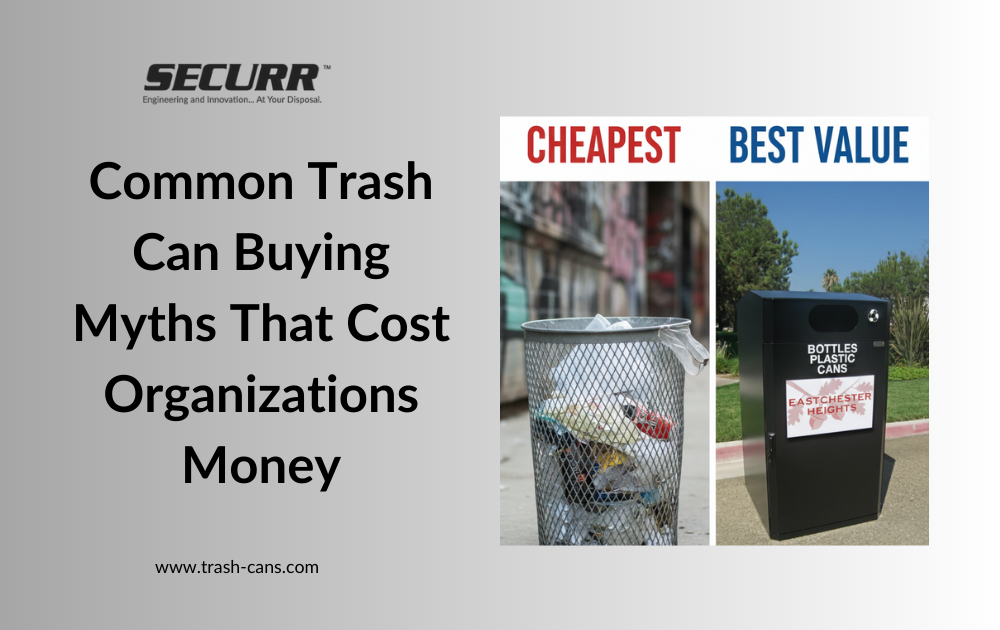
When organizations shop for waste solutions, trash cans often seem like a simple, low-risk purchase. In reality, buying the wrong trash cans can quietly drain budgets, create safety issues, and increase long-term operational costs. As a leading trash can manufacturer, Securr works with municipalities, facilities managers, schools, and commercial organizations every day—and we see the same misconceptions repeatedly. Let’s break down the most expensive trash can buying myths and explain how to avoid them. Myth #1: The Cheapest Trash Can Is the Best Value One of the most common mistakes organizations make is prioritizing upfront price over long-term performance. Low-cost trash cans are often made with thin materials that: Crack or warp in extreme weather Corrode quickly in outdoor environments Require frequent replacement What looks like a budget win becomes a recurring expense. The reality:A high-quality trash can from a reputable trash can manufacturer delivers a lower total cost of ownership. Durable construction, weather resistance, and vandal-resistant designs dramatically reduce...